.png)
Funny French expressions with animals, fruits and vegetables
Jan 6
4 min read
Why French is full of animal and food expressions ?
How these everyday expressions are used and what they really mean ?

If you are learning, improving or perfecting your French, using some of the typical French expressions is always a plus when you converse with a French speaking native.
French is famous for its elegance and it is also wonderfully expressive, playful, and sometimes downright funny. One of the best ways to discover this is through French expressions involving animals, fruits, and vegetables, which are used daily by native speakers.
Let’s explore some of the most popular and funny French expressions with animals, fruits and vegetables and trust me, they’re vachement fun!
Fruits and vegetables with feelings

"Avoir la pêche" or "Avoir la patate !" / Literally to have the peach or to have the potatoe !

If a French person asks you: "Tu as la patate aujourd’hui ?" or "Tu as la pêche" they’re not checking your shopping list. Both expressions mean “Are you feeling good / in a good mood today?”
Artichaut / Artichoke
On the other hand, someone who falls in love very easily is said to have "un cœur d’artichaut" - an artichoke heart, because its leaves come off one by one.
Chou / Cabbage
A very affectionate expression, often used with children or loved ones, is "Oh mon petit chou" (“my little cabbage”), which simply means my dear or sweetheart.

Carottes / Carrots
When a situation is beyond repair you may say "Les carottes sont cuites" literally the carrots are cooked, meaning it’s over, there’s no turning back.
Animals everywhere
Animals are everywhere in French idioms, especially to describe behaviour.
A stubborn person is "têtu comme une mule" (as stubborn as a mule).
Someone very hungry might say "J’ai une faim de loup !" (I’m starving!).
A very gentle person is "doux comme un agneau" (as gentle as a lamb).
Feeling low or depressed? You might say "J’ai le cafard" literally I have the cockroach, but meaning I feel down.
And if someone talks badly about others, they may have "une langue de vipère" (a viper’s tongue).
Colourful and humorous sayings
Some great expressions that are almost poetic.
"Les chiens aboient, la caravane passe" means people may criticise, but life goes on.
"C’est une peau de vache !" describes someone really mean or unfair.
"Il marche comme un canard" means someone walks awkwardly.

For something that will never happen, the French say: "Ce sera le jour où les poules auront des dents" (the day hens grow teeth).
And a charming person with a special style? "Il a du chien" - no dogs involved, just charisma.
When animals speak about humans
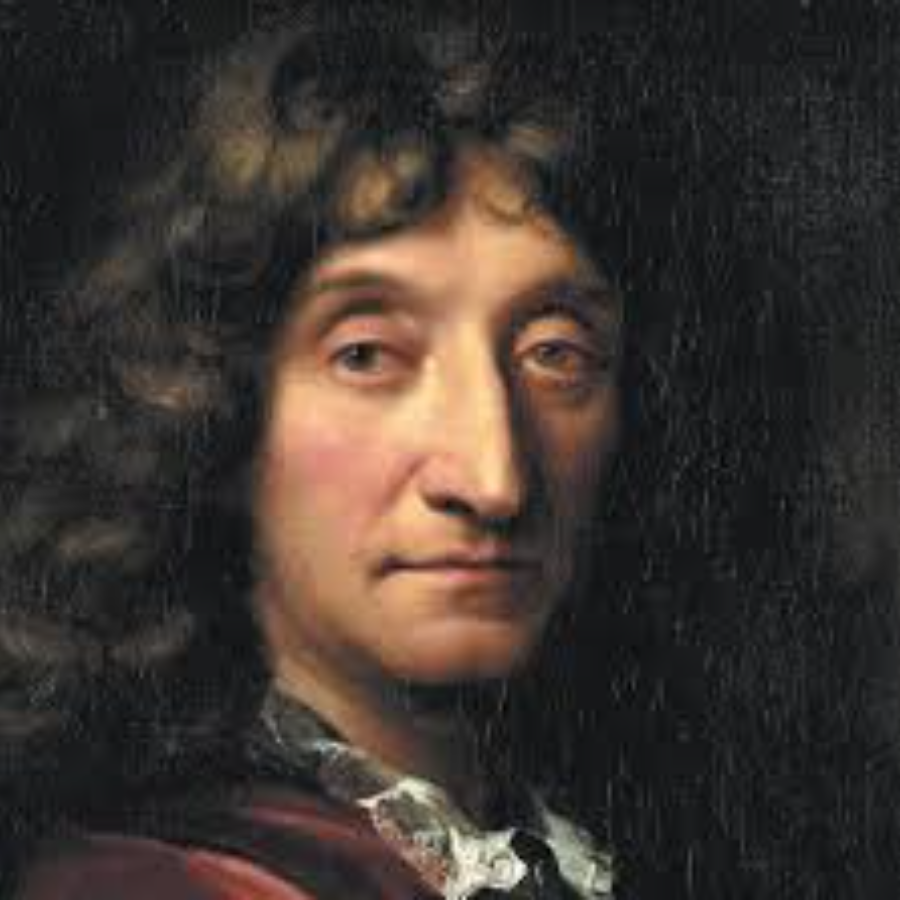
French expressions involving animals are not random. They come from a long cultural and literary tradition, especially from Jean de La Fontaine (1621–1695), one of France’s most famous poets.
In his well-known Fables, La Fontaine uses animals to observe, criticise, and explain human behaviour - pride, cleverness, naivety, patience, power, and injustice.
These short, often humorous stories always end with a moral that remains surprisingly relevant today.
Learned at school from a young age, La Fontaine’s fables are deeply rooted in French collective memory. This explains why animal imagery feels so natural in everyday French expressions, often used unconsciously by native speakers.
Understanding these references helps foreign learners grasp not only the language, but also French humour, nuance, and cultural codes.
From Jean de La Fontaine’s fables to modern French expressions
Here are some clear links between famous fables and every day expressions still used today.

The Crow and the Fox (Le Corbeau et le Renard)
Moral: Beware of flattery and sweet talk.
The moral of Le Corbeau et le Renard is to be cautious of flattery, as those who flatter often have hidden motives and may deceive you for their own gain.
Modern expression: As sly as a fox (rusé comme un renard)
The Hare and the Tortoise (Le Lièvre et la Tortue)
Moral: Patience and perseverance beat speed and arrogance.
Modern expressions:
There’s no point in running (Rien ne sert de courir, il faut partir à point comes directly from the fable)
To take your time

The Wolf and the Lamb (Le Loup et l’Agneau)
Moral: "La raison du plus fort est toujours la meilleure"
The strong often dominate the weak, even when they are wrong, used ironically to denounce injustice or abuse of power.
Modern expressions:
"C’est le pot de terre contre le pot de fer" usually translated into English as "It’s a David versus Goliath situation." A weak person opposing a powerful one, a losing battle.
« Se faire écraser par plus fort que soi » To be crushed by someone more powerful.
Why the French love hearing foreigners use these expressions ?
When foreigners use expressions like avoir la patate, j’ai une faim de loup, or ce sera le jour où les poules auront des dents, French people usually smile.
Why? Because it shows:
genuine cultural immersion
an effort to speak natural, living French
a relaxed and friendly approach to the language
Just like Jean de La Fontaine, these expressions use animals to say something deeper about human nature.
Why these expressions matter ?
These expressions are not just funny, they are deeply rooted in everyday French. When foreigners use them correctly, French people love it. It sounds natural, friendly, and shows real cultural understanding.
So don’t be afraid to talk about wolves, carrots, artichokes, or mules. Learning French is also about enjoying its humour, and letting the language transform you, consciously and unconsciously.

After all, learning French without these expressions would be… sans piment (missing some spice)!
Do you wish to learn, improve or perfect your French in the Dordogne or online?
Dordogne French Courses offers small group, private, and semi-private in-person or online French classes all year round.
Please visit our website to find the course that suits you best. HERE


Comments