
Learning French: Q&A!
Learning French (or any language!) is an exciting journey, but we often meet people who come to us with questions, doubts, and sometimes even a little apprehension.
Whether you're taking your very first steps in French or looking to take your existing skills to the next level, you've probably asked yourself one or more of these questions:
How to learn French as an adult and where do I start?
Is there an age where learning French becomes difficult?
A little story about Joan's first steps in French
What is the easiest way to learn French as a beginner?
How can I learn French from scratch?
How easy is it to learn French without living in France?
Afraid of speaking French? You freeze? You're not alone!
How can I improve my French and make progress solo?
How to improve my French pronunciation?
Private French lessons vs group classes
Are Online French classes worth it?
What is the best way to learn French online?
Where can I find Online French classes with a real teacher?
Can you really learn to speak French Online?
Whatever your age, where you're from or how much French you know (even if it's absolutely nothing!), it's never too late to start learning. With the right teacher and the right approach, you'll be amazed at how much progress you can make. So, why not give it a go?
That's exactly what we're here for!
In this article, we'll answer some of your questions, share practical tips and useful resources, bust a few common myths and help you discover the learning methods that work best for you.
Beginner or nearly fluent?
Wherever you are on your French learning journey, we're delighted to have you here! Please read more and explore the wonderful world of French with us!
Bienvenue chez Dordogne French Courses!
1. How to learn French as an adult and where do I start?

Whatever your actual mother tongue or your age, we believe the best way to learn French as an adult is to combine structured lessons, regular listening and reading, and beaucoup, beaucoup of speaking practice!
Start with really useful vocabulary, everyday expressions and a little basic grammar. Focus on words and sentences you can easily use in real-life situations, such as:
Bonjour, bonsoir, au revoir, à bientôt, à demain…
J'ai faim, je vis à Londres, j'aime marcher, j’adore le chocolat, combien ça coûte ?
Je m'appelle…, J'ai 40 ans (not “je suis 40 ans”!), je suis espagnol, j'habite à Bordeaux, je suis médecin, je joue au tennis, j’ai un chien…
Practise a little every day. Even if you only have 15 minutes, take a moment to say French words and sentences out loud. Don't just read them silently in your head, give your voice a workout!
This simple exercise will help you improve your pronunciation, feel the sounds and rhythm of French, and feel more comfortable speaking. You can do it anywhere…maybe not too loudly on the train or in the bus!
Whenever possible, look for opportunities to speak French with your teacher, other learners or French speaking people. The more you practise, the more confident you'll become.
And remember, you don't need to know everything before opening your mouth. If you know just 100 French words, you're already good to go! Start using them, make mistakes, laugh about them and learn as you go. Repetition will help you retain the words and sentences and improve your pronunciation. That's how real progress happens. Guaranteed!
2. Is there an age where learning French becomes difficult?
Absolutely not! Your age is not the problem; it's how young you feel when you decide to learn something new!
There is no magic age after which your brain suddenly decides it's had enough of French conversation or French grammar! While children may pick up certain aspects of a new language more naturally, adults have many advantages too: life experience, motivation, curiosity and the ability to understand how a language works. Learning French as an adult may require a little patience and regular practice, but it is absolutely achievable. And remember, learning a foreign language is an excellent exercise for our brain. It’s a good stimulation for cognitive functions such as memory, concentration, attention and problem solving, while encouraging the brain to build new pathways.
Find the fun in your learning adventure.
And above all, don't forget to have fun! Learning a new language is an exciting challenge, full of little discoveries, surprises and rewarding moments. Don't see it as a mountain to climb, but as an adventure to enjoy, one word and one conversation at a time. Embrace the challenge, enjoy the journey and celebrate every little victory!
A real workout for our brain!
When we learn something new, like a foreign language, our brain doesn't simply memorise a collection of new words. It activates and coordinates several interconnected networks involved in:
memory → remembering vocabulary, expressions, grammatical rules, verb conjugations…
attention → recognising sounds, following conversations,
cognitive → flexibility like switching between languages, finding different ways to express yourself, understanding sentence structures, and working out the meaning of unfamiliar expressions.
All these activities challenge your brain and encourage it to adapt.
As we get older, some cognitive functions naturally change. However, our brains retain their ability to adapt and learn well into adulthood and later life.
Although research is still ongoing, studies suggest that learning and using multiple languages can influence brain connectivity and certain cognitive functions.
So, whether you're 25, 45 or 75, learning French is not just a way to communicate with more people, it's also a wonderful way to keep your mind active.
3. A little story about Joan's first steps in French

Joan, a 55-year old American who spent a few months near Eymet in the Dordogne, decided it was finally time to learn some French. She was an absolute beginner and, although excited about the idea, she was also rather apprehensive before starting her course. At her age, she wondered whether she would be able to keep up. Would she understand the teacher? Being part of an international group class, she was a little worried about being judged, she’d made mistakes, speaking in front of the other class mates…
But, as she later admitted, something wonderful happened very quickly once the first lessons began. Thanks to her French teacher, who immediately instilled confidence in every member of the group, Joan soon realised that there was no need to feel embarrassed. The atmosphere was so friendly and relaxed. Everyone was there to learn. They were “all in the same boat”! Very quickly, she felt completely at ease.
She began to enjoy the classes so much that she actually looked forward to her French lessons. And, petit à petit, she could see just how much she was improving. What had initially seemed like a daunting challenge had become so interesting, so fun, something she genuinely loved.
Joan was quite a sociable person, so speaking up in class wasn't a problem for her. This helped her make progress very quickly. But the real breakthrough was overcoming that initial fear, the mental barrier we sometimes put up ourselves. Once she let go of it, she felt free to enjoy the experience and make the most of her learning.
Joan's story is a good reminder that we don't necessarily need to feel confident before we start. Sometimes, we just need to take the leap, to get out of our comfort zone. Confidence comes from simply taking that first step!
4. What is the easiest way to learn French as a beginner?
Start with simple, practical French. Learn how to introduce yourself, ask questions, order food, talk about your family and describe your daily routine. And don't worry if you make mistakes, who cares? That's how you learn! Combine short lessons with listening exercises and simple conversations. A beginner friendly course with a real (human!) teacher can help you avoid confusion, get your pronunciation right and build good habits from the start. And remember, there's no need to learn the entire dictionary in your first week!
5. How can I learn French from scratch?
If you're starting from absolute zero, don't panic! The best way is to follow a clear progression, set yourself small, achievable goals, find yourself a good teacher, and build your French step by step.
Here's where to begin:
Start with numbers and sounds. Learn to count to 50 (or further if you're feeling ambitious!) and get familiar with French letter combinations such as ai, au, oi, ou, un, ain, etc. French pronunciation can seem a little mysterious at first, but don't worry you'll get the hang of it!
Learn essential expressions. Bonjour, bonsoir, merci, s'il vous plaît, au revoir… These little words will take you a surprisingly long way.
Build useful everyday vocabulary. Focus on topics such as family, home, food, work, hobbies, shopping and daily routines.
Get to know some essential verbs. Start with regular -er verbs such as manger, aimer, parler, marcher, regarder…, as well as two very important (and slightly irregular!) verbs: être and avoir.
Understand simple sentence structures and basic grammar. Learn how to put words together to express simple ideas, ask questions and talk about yourself.
Start by picking up a few simple words that you like, such as chat, chien, voiture, pomme, pain, forêt, vin, noir... Then try putting them together into simple sentences and saying them out loud, such as:
J'aime le vin.
Je marche dans la forêt.
J'aime mon chat.
Le chien est noir.
Je regarde la voiture.
Je parle français.
These are just a few examples to get you started. Have fun playing around with words, mixing and matching them, and creating your own little sentences. You'll be surprised how much you can already say!
Working from A1.1 (absolute beginner) towards A1 (beginner) is a great starting point. Once you feel comfortable with basic communication, you can gradually move towards A2 and beyond.
Remember, there's no race to the finish line! Go at your own pace, take your time and focus on building strong foundations. It's much better to master the basics than to rush through grammar and end up feeling completely lost. Petit à petit, as the French say… little by little!
6. How easy is it to learn French without living in France?

Probably easier than you might think!
You can create your very own French speaking environment wherever you are in the world.
Listen to French podcasts, watch French films, follow French content creators, read simple articles, and keep a little French journal. Write down new words, play around with simple sentences, and read them out loud. The more you hear, read and use French, the more familiar it will become.
And most importantly? Speak French as often as you can!
Even if it's just talking to yourself in the shower, practising out loud or having a conversation with someone who can guide you. Don't wait until you feel ready or fluent. That's what practice is for!
You can bring a little piece of France into your everyday life, even if you're thousands of kilometres away.
7. Afraid of speaking French? You freeze? You're not alone!
You know your verbs, you've learnt plenty of vocabulary, and you can understand quite a bit of French. But when it comes to speaking, something happens: you freeze, you hesitate, and suddenly the words just won't come out!
Sound familiar?
You're not alone. A majority of learners experience this. The fear of making mistakes, being judged or sounding silly can create anxiety and stop you from expressing yourself. And if you're a perfectionist, you may feel that every sentence needs to be grammatically perfect before you dare to say it.
Who said you need perfect French to communicate? Making mistakes is a natural part of learning. Every conversation is an opportunity to practise, improve and gain confidence.
So, take a breath, let go of perfectionism and give yourself permission to make mistakes. Start with a few words, then a sentence, then a conversation.
Remember: the goal isn't to speak perfect French. It's to communicate, connect with people and enjoy the experience!
8. How can I improve my French and make progress solo?
Talk to yourself in French!
Absolument! The idea is to practise French as much as possible, even when you're on your own.
Think about the phrases and expressions you use most often during the day. Translate them into French and say them out loud. It might feel a little repetitive at first, but before long, you'll find yourself saying them almost automatically. It's also a great way to work on your pronunciation.
For a bit of fun, why not record yourself and listen back? You'll be able to hear how you're doing and spot the sounds you might need to practise.
Le secret? Practise, practise and practise some more!
Read and write in French EVERY DAY
It doesn't matter what you read or write. The important thing is to do a little every day!
It could be a newspaper article, a few pages of a book, a diary or a journal entry or even just a couple of sentences about your day or how you're feeling.
Listen to TV5MONDE
Whatever your level of French, TV5MONDE is a fantastic resource.
You'll find plenty of French-language programmes, news reports, short interviews and documentaries, as well as learning activities for different levels, from A1 to C2. It's also a wonderful way to discover French culture and current affairs, both in France and in French-speaking countries around the world.
Don't worry if you don't understand everything at first! Start with short videos, use subtitles when you need them and gradually challenge yourself to understand a little more. You can also use the transcripts available with many learning resources to follow along and check your understanding.
Listen to French music
Who doesn't love a good tune?
Aux Champs-Élysées by Joe Dassin is a great place to start. It's a French classic, with a catchy melody and relatively simple lyrics. You might even recognise it already!
Music is a brilliant way to get closer to a language. Find a French song you enjoy on YouTube, look up the lyrics and try singing along. You could even challenge yourself to learn the whole song by heart!
Pay attention to the pronunciation, listen out for familiar words and expressions, and don't be afraid to sing out loud. You don't need to sound like a pop star!
Get into French podcasts
French can sound quite different from the way it's written, so listening should be an important part of your learning routine.
And thank goodness for the internet! There are plenty of French podcasts you can listen to for free, wherever you are.
Listen while you're walking the dog, driving, cooking or doing the washing up. You don't have to understand every single word. Just getting used to the sound and rhythm of French is already a great start!
Find a French-speaking language exchange partner
There's no getting around it: if you really want to learn to speak French, you need to speak it!
A language exchange is a great way to practise with a native French speaker while helping them learn your language in return. You can meet online using tools such as WhatsApp, Google Meet or Microsoft Teams, or arrange to meet in person if you live nearby.
Here are a couple of websites where you can find a language exchange partner:
Repeat, repeat, repeat!
Here's a simple but effective trick: choose a French word or expression and make it your word of the day, like a mantra!
Repetition is one of the best ways to help new vocabulary stick. The more often you come across a word, hear it, read it or use it, the more familiar it becomes. There's no magic number of repetitions, though. Some words stick straight away, while others take a little more effort.
Try using your word of the day as often as possible. Write it down, say it out loud, use it in a sentence and see if you can slip it into a conversation.
And don't worry if you forget it tomorrow. Just repeat the process. That's how learning works!
9. How to improve my French pronunciation?
Our advice? Find every opportunity to listen to and speak French as regularly as possible. The more you practise, the more confident you'll become, and the more your pronunciation will improve.
Listen to the radio (ideally, choose stations with presenters who speak clear, standard French), watch French films, listen to podcasts, to French singers on YouTube. Try listening to the same words and expressions several times, then repeat them out loud. Don't be shy, imitate the sounds, the rhythm and the intonation!
There are so many free resources online that can help you improve your French pronunciation. Make the most of them, and remember, like for anything else, little and often is the way to go!
10. Private French lessons vs group classes
It depends on your personality, budget and learning objectives. Both formats have their advantages.
Private lessons offer individual attention, flexibility and content tailored to your specific needs. They're particularly useful if you have a very specific goal, need to work at your own pace or prefer one-to-one tuition.
Group classes, on the other hand, are cheaper, they give you the chance to interact with other learners, listen to different people and practise conversations in a friendly, social setting. You can learn from each other's questions and mistakes, too.
Ultimately, there's no single right answer. The best option is the one that suits the way you like to learn.
11. Are Online French Classes worth it?
Bien sûr ! (Of course!)
Especially if you choose a course that includes real interaction with a real, human teacher!
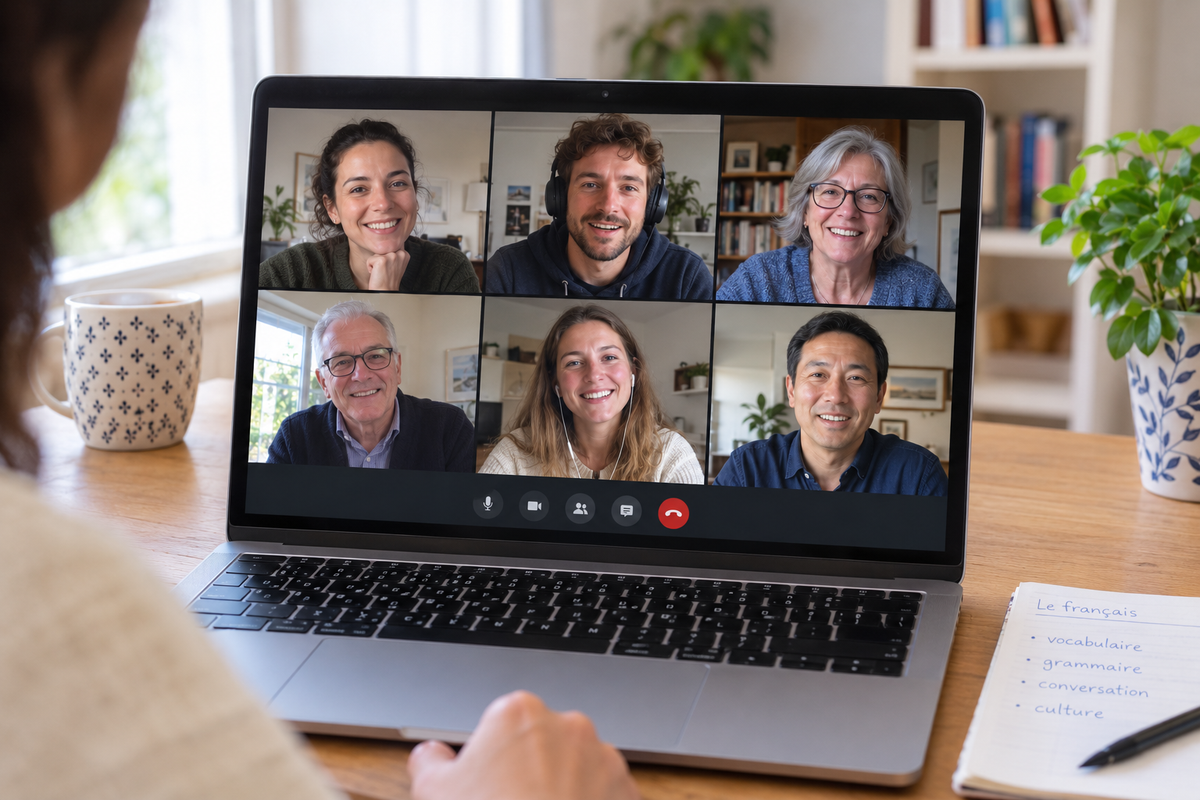
Online French classes can be fantastic. No commuting, more flexibility and the freedom to learn from just about anywhere. You can get personalised feedback, practise speaking, ask questions and learn at a pace that works for you.
Watching videos and completing exercises on your own can certainly help, but they won't necessarily get you speaking confidently. They're useful tools, but they shouldn't be your entire learning experience.
If your goal is to communicate in French, you need to SPEAK French! And ideally, you should have a real teacher who can guide you, correct your mistakes and help you build confidence along the way.
So, yes, online classes are absolutely worth it. Just make sure there's a real human being on the other side of the screen!
12. What is the best way to learn French Online?
The secret? A good mix of live lessons, independent study and regular practice.
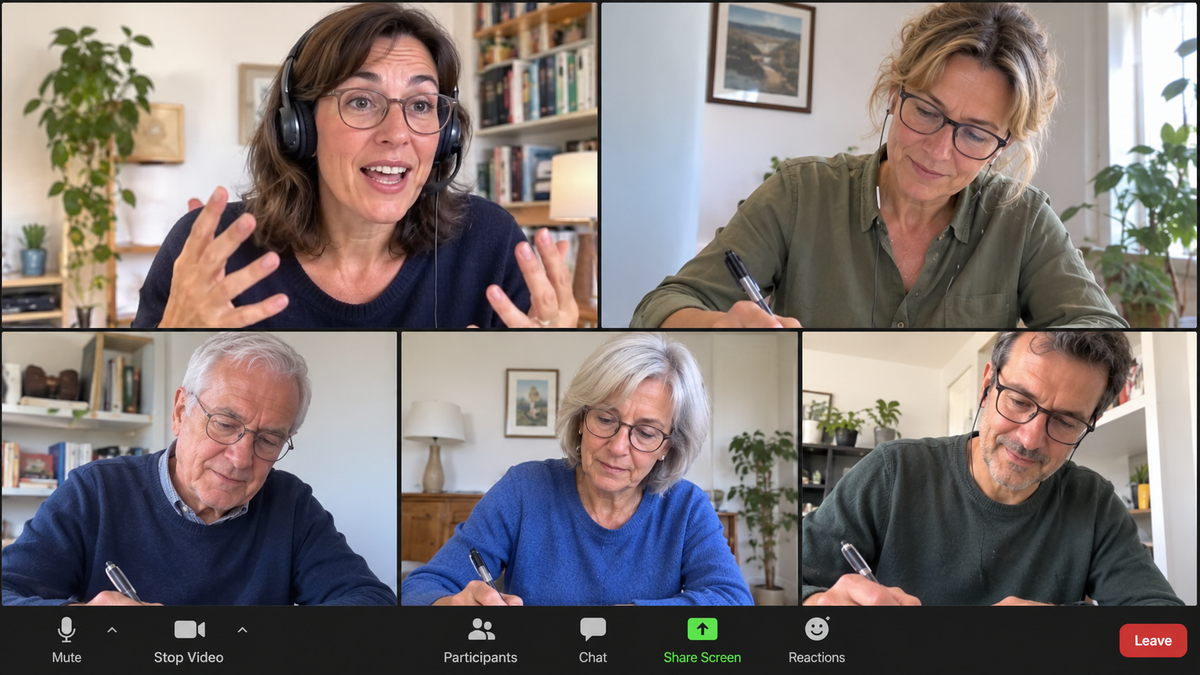
Start by choosing a structured online course with a communicative approach. Ideally, look for a small group where you can interact with your teacher, ask questions and get plenty of opportunities to speak.
Practise speaking during your lessons, listen to French in your spare time and make a habit of revising new vocabulary regularly.
And here's something important: your lessons should be adapted to YOUR level, YOUR needs and YOUR personal goals. After all, we're not all learning French for the same reasons!
The best online course isn't necessarily the one with the most bells and whistles. It's the one that keeps you motivated, helps you build confidence and allows you to make real, steady progress.
Ultimately, your goal probably isn't just to learn French. It's to actually USE it!
13. Where can I find Online French classes with a real teacher?
You can find online French teachers through independent language teaching websites, tutoring platforms and specialist French language schools.
But how do you choose?
Look for teachers who offer clear learning objectives and plenty of opportunities to practise speaking. Before committing to a course, check their teaching approach, experience, and availability.
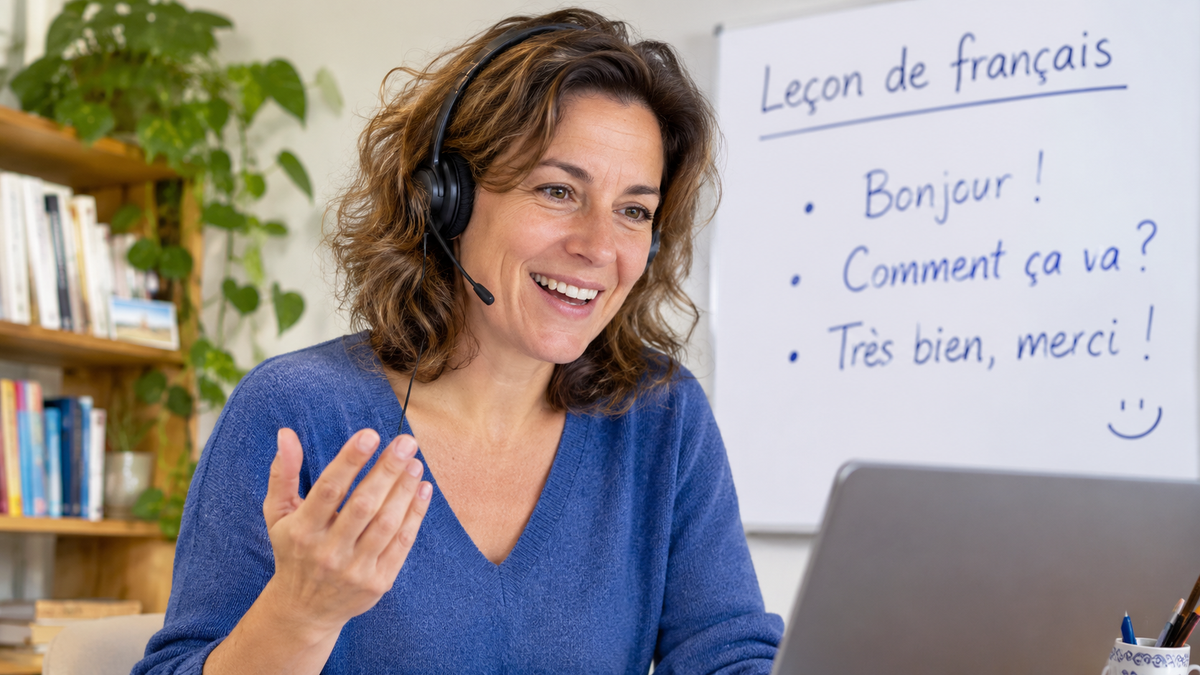
And why choose a real, human teacher? Because learning a language should be a living experience, interactive, practical and enjoyable. It's more than learning words and grammar. It's about communicating, connecting with people and gaining the confidence to use French in real life.
14. Can you really learn to speak French Online?
Oui!
You can develop excellent speaking skills through online lessons, provided you're actively involved. Live lessons allow you to ask questions, practise pronunciation, respond to your teacher and have genuine conversations.
The important thing is not to become a passive student. Speak, make mistakes, try again and gradually build your confidence.
Your computer screen doesn't have to be a barrier to real communication. With the right teacher and plenty of opportunities to practise, you can make fantastic progress from the comfort of your own home.
Et maintenant… pourquoi pas vous?
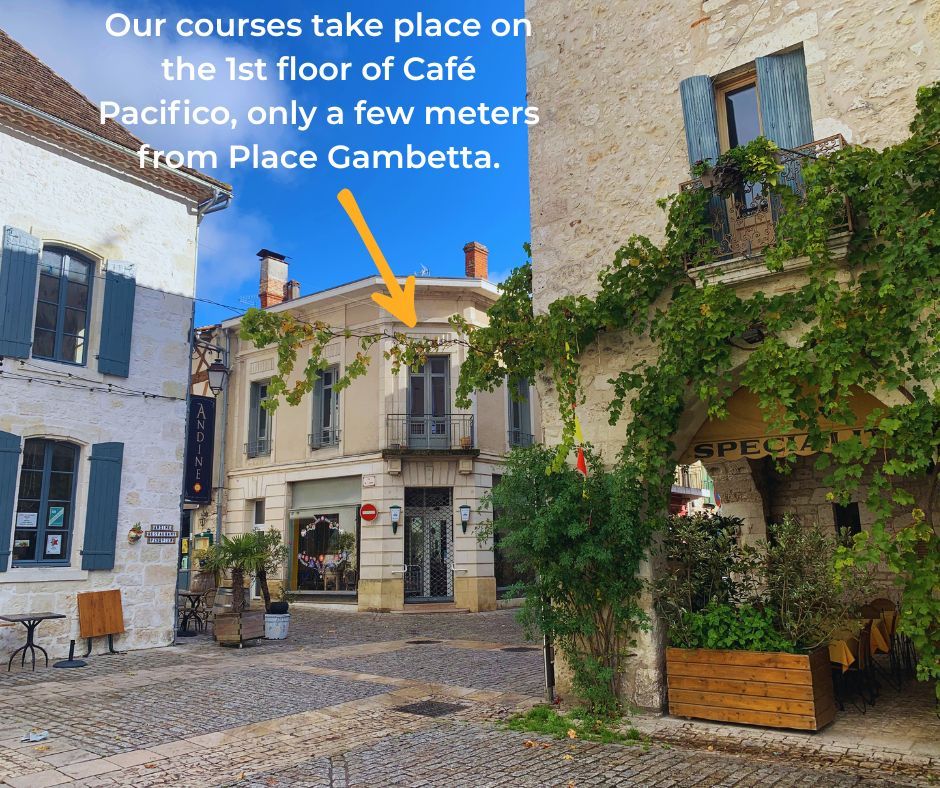
Whether you're dreaming of speaking French on your next holiday, settling into life in France, chatting with your French neighbours, preparing a French exam or simply discovering a new language, we'd love to help you!
At Dordogne French Courses we believe learning French should be practical, enjoyable and, above all, fun. No pressure, no fear of making mistakes, just friendly lessons, plenty of speaking practice and lots of encouragement by our teachers along the way!
Curious to find out more about our French courses in the Dordogne or our Online French classes? Please contact us HERE
À bientôt!